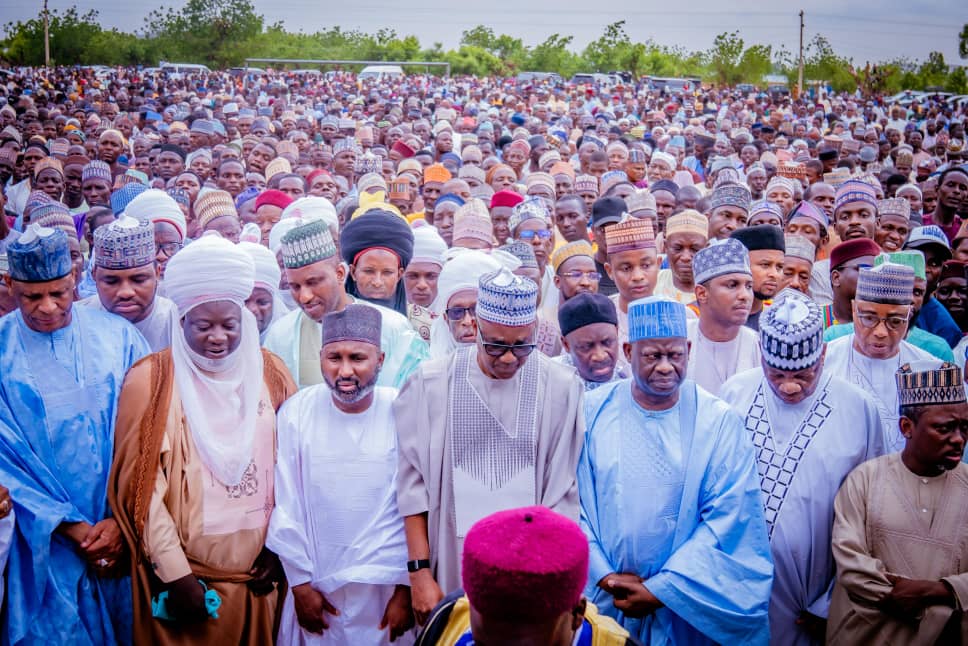
Speaker Abbas mourns ex-Super Eagles coach, Onigbinde
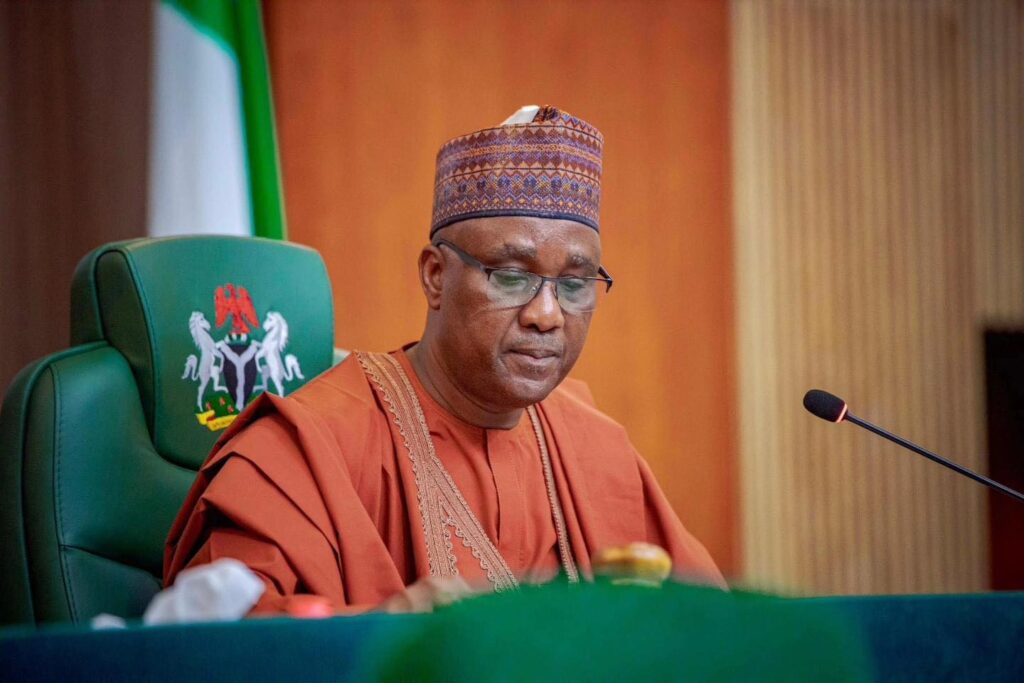
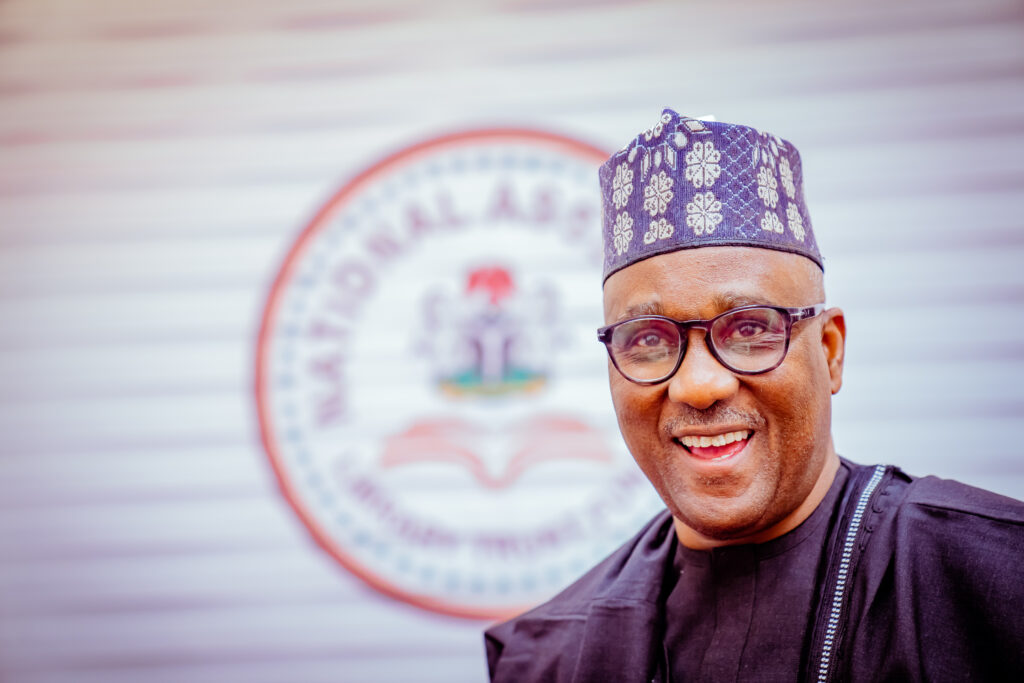
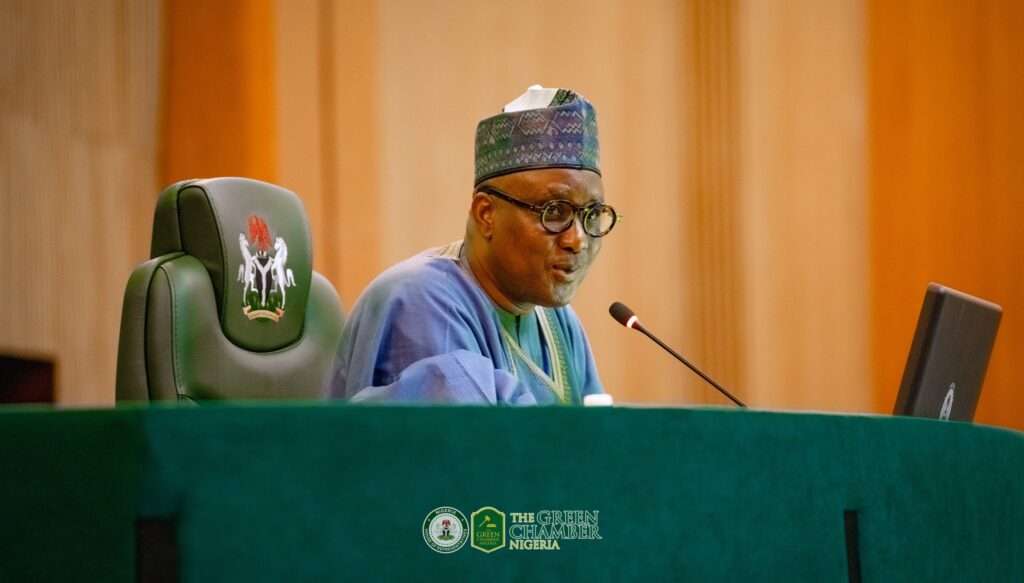
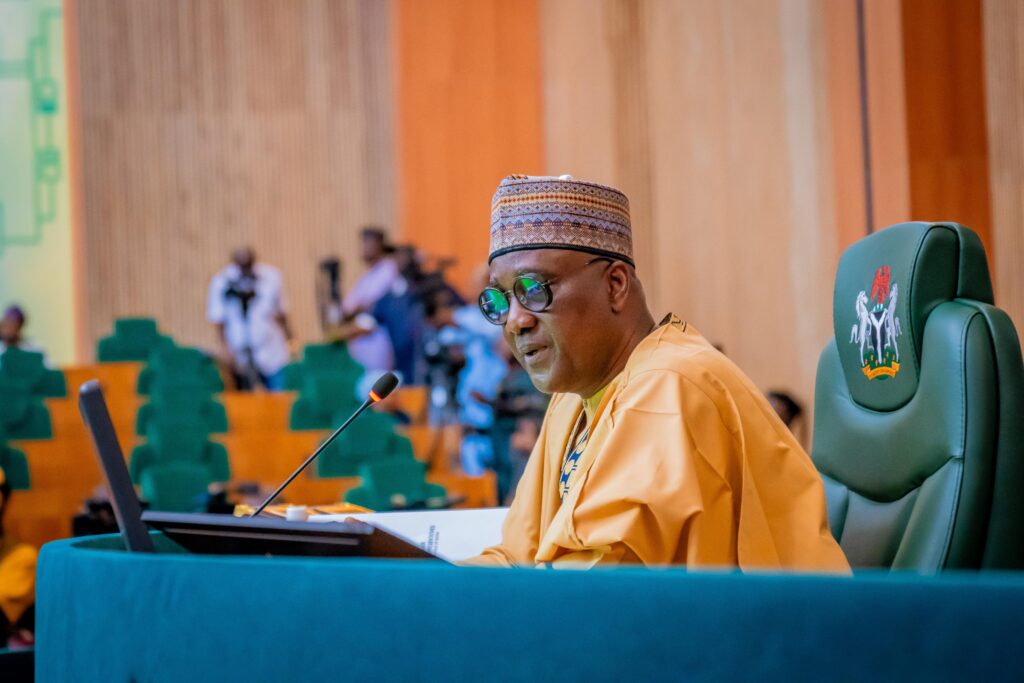
The Speaker of the House of Representatives Rt. Hon. Abbas Tajudeen, Ph.D., GCON, has mourned a former head coach of the Super Eagles, Chief Festus Adegboye Onigbinde.
Speaker Abbas, in a condolence message issued through his Special Adviser on Media and Publicity, Musa Abdullahi Krishi, described Chief Onigbinde as a renowned football administrator and elder statesman.
Speaker Abbas noted Chief Onigbinde’s immense contributions to football development, which he described as national service inspired by patriotism.
The Speaker commiserated with the Onigbinde family and extended his condolences to Osun State, National Sports Commission (NSC), Nigeria Football Federation (NFF), entire sports community, and football fans.
Speaker Abbas prayed for the repose of Chief Onigbinde’s soul and the fortitude for his family to bear the loss.
Chief Onigbinde, from Modaleke in Osun State, passed on at the age of 88 on Monday. He became the first indigenous coach of Nigeria’s male national football team and served as technical director of the NFF and technical adviser of the youth teams of the Trinidad and Tobago Football Federation. He was also a technical director at FIFA, world’s football governing body.
Women’s Day: Speaker Abbas reiterates commitment to gender equality, inclusion
The Speaker of the House of Representatives Rt. Hon. Abbas Tajudeen, Ph.D., GCON, has reiterated his commitment to women’s empowerment and inclusion in politics and governance of Nigeria, noting that they are critical and indispensable stakeholders in the society.
Speaker Abbas, in his congratulatory message on the occasion of International Women’s Day on Sunday, stressed the need to prioritise women counterparts in home and nation-building. He noted that women have broken academic, political, economic, and professional records, achieving great feats in all human endeavours.
While calling for unanimous support for the Reserved Seats Bill currently under consideration by the National Assembly in the ongoing review of the 1999 Constitution, the Speaker stressed the importance of gender balance, equality, and inclusion in the management of the country’s affairs.
Speaker Abbas wishes Nigerian women happy celebrations.
Speaker Abbas loses Deputy Chief of Staff Chamberlain
…describes demise as shocking, devastating
The Speaker of the House of Representatives Rt. Hon. Abbas Tajudeen, Ph.D., GCON, has expressed profound shock over the passing of his Deputy Chief of Staff (Legislative), Dr. Dunkwu Chamberlain Nnamdi.
Dr. Chamberlain, who hailed from the Uteh Okpu community in the Ika North East Local Government Area of Delta State, was also the President of the Nigerian Aquatics Federation (NAqF). He would have been 55 years old on March 21.
Speaker Abbas, who was visibly shocked, described Dr. Chamberlain’s passing as devastating, noting that it is “one death too many.”
In a press statement issued through his Special Adviser on Media and Publicity, Musa Abdullahi Krishi, the Speaker said he was “deeply saddened that Dr. Chamberlain died while actively serving his fatherland.”
“It is with a heavy heart that I mourn the passing of my Deputy Chief of Staff (Legislative), Dr. Dunkwu Chamberlain Nnamdi, who passed in the early hours of Saturday, March 7, 2026.
“Dr. Chamberlain was not just my Deputy Chief of Staff; he was a dependable and committed ally who served diligently until his last breath. Chamberlain was full of life just a few hours before his passing when he joined me and my colleagues at the breaking of fast on Friday evening.
“This is indeed a moment of grief for me, my colleagues, his family, and the staff in my office as we mourn the death of this wonderful human being. This is one death too many! But we find solace in the fact that Dr. Chamberlain lived a life of service to humanity and his country.
“He leaves behind a legacy of selflessness, dedication, sacrifice, and a sense of responsibility. We will miss him dearly. My thoughts and prayers are with his family at this trying moment. I pray to the Almighty God to accept his soul,” the Speaker said.
Speaker Abbas, who visited the family of the late Deputy Chief of Staff to commiserate with the widow and children, said, “Whatever has a beginning must have an end. Please, take heart. It is really shocking, but we can’t question God. He lived a life full of service to humanity.”
The Speaker prayed to God to give the family the fortitude to bear the irreparable loss.
Dr. Chamberlain was appointed as the Deputy Chief of Staff (Legislative) to the Speaker on June 26, 2023, after he had served as the Special Adviser on Members’ Affairs to the Speaker of the 9th Assembly and Chief of Staff to the President, Rt. Hon. Femi Gbajabiamila.
He was a loyal and committed member of the All Progressives Congress (APC). He was also an astute sports administrator in Nigeria. Dr. Chamberlain was a Knight of Anglican Communion, Nigeria, Asaba Diocese.
The Speaker of the House of Representatives Rt. Hon. Abbas Tajudeen, Ph.D., GCON, has felicitated former President Olusegun Aremu Obasanjo as he clocks 89, describing him as an elder statesman with a global influence.
In his congratulatory message, the Speaker said Obasanjo remains one of the leaders Nigerians consult on national issues due to his wealth of experience drawn from decades of military and political experience.
He noted that Obasanjo is the first of only two Nigerians—before the late former President Muhammadu Buhari—to have led the country as military Head of State and democratically elected president, making him one of the most privileged Nigerians.
Speaker Abbas thanked Obasanjo for his services to the country and continued guidance to the current political class. He also appreciated the ex-president for being Nigeria’s global ambassador, especially on peacekeeping and democratic interventions in Africa and beyond.
The Speaker prayed to God to grant former President Obasanjo more years on earth to continue to play his fatherly roles in Nigeria and the African continent.
Speaker Abbas hails Alhaja Lateefat Gbajabiamila at 96
The Speaker of the House of Representatives Rt. Hon. Abbas Tajudeen, Ph.D., GCON, has congratulated Alhaja Lateefat Olufunke Gbajabiamila on her 96th birthday, saying her life has been impactful and her legacies are enduring.
He especially hailed the nonagenarian and matriarch of the Lateef Gbajabiamila family of Lagos for her contributions to healthcare, Islam, women and children, as well as philanthropic gestures to the society at large.
Speaker Abbas, in his congratulatory message to Alhaja Lateefat, who is the mother of his predecessor and current Chief of Staff to the President, Rt. Hon. Femi Gbajabiamila, eulogised her for her professional excellence, leadership qualities, and peace building initiatives in her immediate community and beyond.
The Speaker noted that the life of Alhaja Lateefat, a United Kingdom–trained nurse who was recently conferred with the Doctor of Science (D.Sc. Honoris Causa) in Business Administration by the Summit University, Offa, Kwara State, is fulfilling and inspiring.
Speaker Abbas prayed to Allah (SWT) to grant Alhaja Lateefat Gbajabiamila more years on earth in service to humanity. He wished her sound health and acceptance of her prayers in this holy month of Ramadan.
Why NASS included both electronic and manual transmissions in Electoral Act—Speaker Abbas
…says 2027 elections will be more transparent, accommodating, inclusiveWhy NASS included both electronic and manual transmissions in Electoral Act—Speaker Abbas
The Speaker of the House of Representatives Rt. Hon. Abbas Tajudeen, Ph.D., GCON, has said that the National Assembly included both electronic and manual transmissions of results in the amended Electoral Act to avoid disenfranchising the Nigerian electorate and prevent voter apathy during the 2027 general elections.
Speaker Abbas noted that due to inadequate internet penetration in the country, it will be counterproductive to allow only one—electronic—form of results transmission in the Electoral Act.
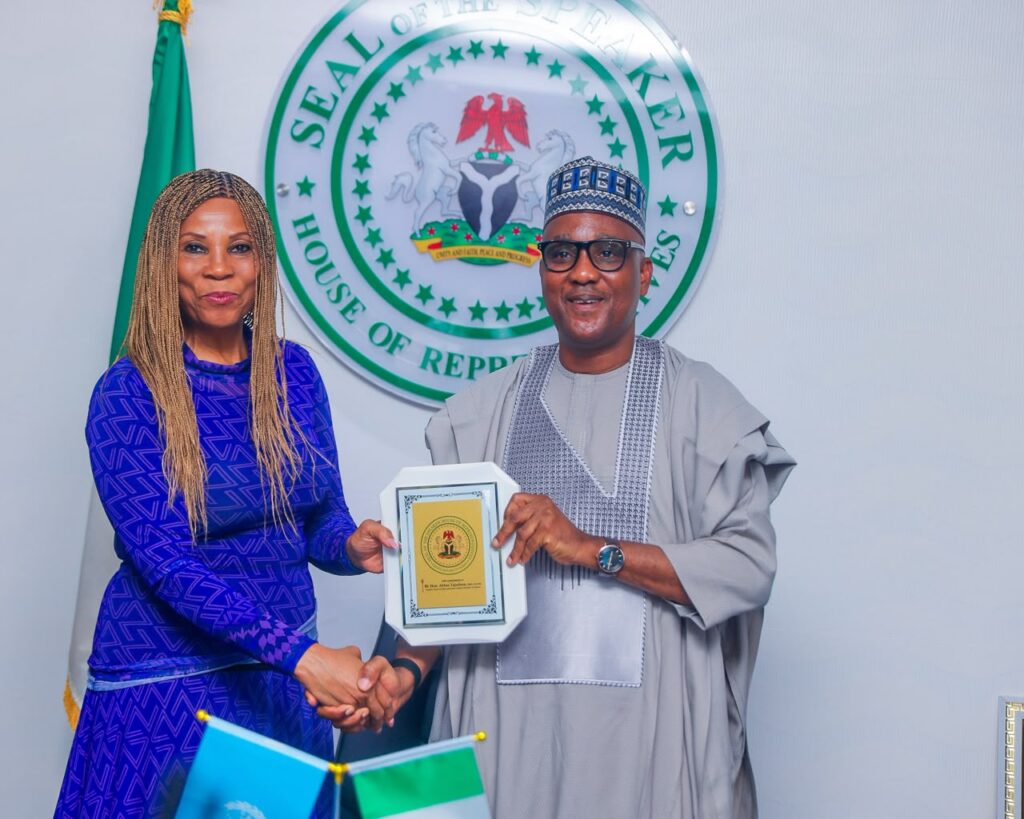
He spoke when he hosted the Ambassador of Spain in Nigeria, Ambassador Felix Costales, during a courtesy call over the weekend at his office in Abuja. He received the Spanish Ambassador in the company of the Chairman House Committee on Appropriations, Hon. Abubakar Kabir Bichi; the Chairman of the Committee on Foreign Affairs, Hon. Wole Oke; and the Chairman of the Nigeria-China Parliamentary Friendship Group, Hon. Jafaru Yakubu.
This is even as the Spanish Ambassador revealed that his country also transmits election results manually.
The Speaker also assured that, based on his interaction with the Chairman of the Independent National Electoral Commission (INEC), Prof. Joash Amupitan, the 2027 general elections “will be more transparent, accommodating, and inclusive.”
On the Electoral Act, the Speaker said, “…as you said, sometimes people scream far beyond the exact level of the issue. A lot of people think that we need to embrace electronic transmission real-time in Nigeria, but within the very little period that you’ve been in Nigeria, you should be able to speak on the quality of our internet network. You should know that even in advanced cities like Abuja, you are not guaranteed stable internet services all the time.
“Based on the NCC report, they said Nigeria is still underserved by almost 40 per cent, which means 40 per cent of territories at large in Nigeria are not covered by the internet. Now, tell me, for those who are saying we should go ahead and do that, already if you look at the number of our registered voters in this country, it is alarming. It is sad to say that even with the manual arrangement we are using, we are only able to capture about 12-15 per cent of registered voters who, after every four years, come to vote. That’s voter apathy. Very few people go out to vote.
“Now, if we are to introduce (only) the electronic system, it will further reduce the number because 40 per cent of the country will probably not be able to vote as they don’t have adequate internet services. It means what we should be expecting is not only disenfranchising the voters—denying some people the right to vote—we will also record, perhaps, the lowest number of voters in the next elections. These are all avoidable. That is why we said, in our wisdom, the Electoral Act should be hybrid—a combination of both the manual and electronic systems. Where it is feasible to use the electronic, use the electronic transmission; where it is not possible, use the manual, because there is no way one form, particularly the electronic, can be used entirely in all parts of the country for the elections.”
Speaker Abbas explained that members of the opposition who rose against the inclusion of both electronic and manual transmission of results know the true situation of the inadequacy of internet services in the country.
“The opposition, even though they know the truth—they are Nigerians, they live in Nigeria, they travel all over Nigeria—they know that the level of internet penetration in Nigeria is inadequate. There is no way you will be able to have transparent elections using an inadequate system, and through our energy crisis in the country as well, we do not have enough electricity. The internet is always backed by energy; how do you power the entire country on the day of election to have phones that are working and internet that is working, backed by adequate electricity? All those are challenges that, for now, will not be able to provide us the opportunity to do transmission real time online.”
The Speaker stated that every democracy is a work in progress, noting that. “In our entire democracy, we will continue to improve year after year, election after election. America is not what it is today (just like that) if you look at its history. All democracies undergo challenges. I believe Nigeria, with the support of countries like Spain, will do better.
“We expect you to continue to guide us and give us all the technical advice and support to do better, particularly in the National Assembly, through collaboration between your country and our parliament. It will go a long way in strengthening our competence, particularly in areas of legislative drafting and so on. I believe with what you have in Spain, Nigeria can benefit a lot.”
Explaining that Nigeria is doing its best to improve its democracy, Speaker Abbas said, “You cannot say you have everything that you require. You keep on learning. We believe that Nigeria is not doing badly, even though it may not be at the rate that the international community would want to see, but we are moving slowly and gradually. I assure you that the next election is going to be more transparent, more accommodating, and more inclusive than the previous ones. I had the singular opportunity of being with the new INEC chairman. I heard all his plans—what he is planning to do. I believe if all that he said is implemented, Nigeria will move forward.”
Earlier, the Spanish Ambassador to Nigeria, Amb. Contales said his visit was to seek the understanding of the Nigerian Parliament to deepen bilateral relations between the two countries, especially in the area of legislative diplomacy.
He said Spain would follow the 2027 elections closely, assuring that, “You can count on us—whatever we can do to deepen Nigerian democracy. Yes, there may be challenges, but you can count on us in any way possible.”
“I know it is a busy time for the parliament with the approval of a new Electoral Act. I wanted to come and visit you before then. We have the elections here already. Because of the importance of your country, we want to deepen parliamentary diplomacy with Nigeria. It is not yet as developed as we have with other nations, but it is something we should try and welcome in the future, maybe after the elections.”
On the elections, he said, “Of course we are going to follow closely the electoral period ahead of us. It is a long period; elections are always big times; opinions are always polarized. Sometimes when you dig down, you realize that the issues are not that big, or not as big as they seem in the public discourse. It happens a lot in Spain, where we now have a situation where the politics is very, very polarized in Parliament. We have the minority also; it is a phenomenon we witness in Europe and other nations or the US, where there is polarization.
“At the end of the day, if you want to move forward in democracy, you have to reach some level of compromise. We have to try to rule and govern on the level of consensus. Of course, there is rivalry in the game of parliament; we all know this. You go to elections and try to win.”
The bodies were lying in the streets un-buried. All railroads and vessels carrying food and such things into the great city had ceased runnings and mobs of the hungry poor pillaging.