Category: Political

The Speaker of the House of Representatives, Rt. Hon. Abbas Tajudeen, Ph.D, GCON, distributed 60,000 bags of fertiliser among various segments of his constituents on Saturday.

Speaker Abbas distributes 60,000 bags of fertiliser to constituents, others

The Speaker of the House of Representatives, Rt. Hon. Abbas Tajudeen, Ph.D, GCON, distributed 60,000 bags of fertiliser among various segments of his constituents on Saturday.

Speaker Abbas also extended this gesture to the seven other local governments within the Zone 1 Senatorial District: Sabon Gari, Makarfi, Kudan, Soba, Ikara, Kubau, and Lere.

According to a statement from Musa Abdullahi Krishi, the Special Adviser on Media and Publicity to the Speaker, the beneficiaries include farmers’ associations, artisans, women and youth groups, support groups, religious leaders, traditional institutions, community leaders, professional associations, and many others.

Speaking to thousands of beneficiaries at the Mallawa Eid Ground in Zaria, Speaker Abbas explained that this initiative was part of his constituency outreach aimed at supporting farmers and others in need of fertiliser to boost their farming activities for a bountiful harvest.

The Speaker said this year, he chose to increase the quantity of fertiliser distributed to reach more people and promote farming among his constituents.

The Speaker said, “Today marks the third year since we began delivering this intervention. However, this time, we are reaching more people because we have found additional ways to support the communities of Zaria, Zone 1, and Kaduna State as a whole.

“The good thing is that this time around, we are extending this gesture to other local governments in Zone 1. In addition to Zaria, the remaining seven local governments within this zone will benefit as well.

“I hope the fertiliser we’re distributing today will be used wisely by the beneficiaries. I pray for a bumper harvest, far greater than last year’s,” the Speaker noted.

Speaker Abbas also took the opportunity to call for unity among the numerous members and supporters of the APC, urging them to steer clear of anything that might cause division within the party.

“I would also like to use this moment to appeal to the many members of APC and our supporters to unite and avoid actions that could create discord among us. As a people and as a party, we are indeed blessed. I encourage everyone to steer clear of gossip and anything that could lead to division within our party. Envy is foreign to us; jealousy is unknown; and denying others their rights is something we never do.

“The Almighty has granted us a rare opportunity in Zaria, and I urge us not to take it lightly. Let’s engage in politics without any bitterness. Let’s show respect to one another.

“Today, I wish to speak sincerely from my heart: there has never been a time when the Executive branch of our state and the National Assembly members from our dear state shared as warm and friendly a relationship as we currently do. There is a great level of mutual understanding between us and His Excellency, the governor of Kaduna State. We share a bond of trust. There is no distrust between me and the governor.

“So, to those who believe they can employ any tactics to sow discord among us, I assure you they will fail. Therefore, we must stay peaceful and united. I am sure the seat of the Speaker of the House of Representatives is not just a blessing to Zaria or Zone 1; it is a blessing to Kaduna State as a whole. We strive earnestly to treat everyone with fairness and justice.

“May Allah never let us witness a day when we fail to fulfill the trust you have placed in us,” he said.

Read More

The Speaker of the House of Representatives Rt. Hon. Abbas Tajudeen, Ph.D, GCON, on Friday commissioned a modern community market, which he attracted to his late mother’s hometown of Dutsen-Kura community, Kafur Local Government in Katsina State.

Speaker Abbas attracts, commissions community market at late mother’s hometown, Dutsen-Kura

…performs groundbreaking on other projects

The Speaker of the House of Representatives Rt. Hon. Abbas Tajudeen, Ph.D, GCON, on Friday commissioned a modern community market, which he attracted to his late mother’s hometown of Dutsen-Kura community, Kafur Local Government in Katsina State.

This is even as the Speaker performed the groundbreaking on four projects: the Darika Central Mosque, the Dutsen-Kura to Kahutu road, the rehabilitation, and expansion of an earth dam, and a new skills acquisition centre at Gozaki. He also inspected a skills acquisition centre at Dutsen-Kura.

Commissioning the Dutsen-Kura Community Market, the Speaker said the market would open doors of opportunities and boost trading in the community and its environs, noting that it would provide a safe, “orderly and dignified environment in which the commerce of Dutsen-Kura may flourish. It offers modern, secure trading spaces for our farmers, traders, and artisans.

“It is a great honour to stand before you once more, this time to commission the Dutsen-Kura Community Market. On a day already rich with new beginnings, we now inaugurate a project that will touch the daily life of this community perhaps more directly than any other.

“I confess that it moves me deeply to render this service here in Dutsen-Kura, the home of my beloved mother. Every visit to this soil is, for me, a return to my own beginnings, and to the values of honest labour and neighbourly kindness that I first learned among these very people. To build a market for this community is therefore not a duty alone. It is an act of gratitude and of affection.

“A market is far more than a gathering of shops. It is the very centre of a community’s economic life. It is the place where the farmer sells his harvest, where the trader earns her living, and where the artisan finds a buyer for his craft. It is where prices are set, where news is shared, and where the wealth of a community changes hands and multiplies.

“A thriving market is among the surest signs of a thriving people. For too long, however, our people have carried on this vital commerce without a proper and secure place in which to do so. That era ends today. In the life of our people, the market has always been more than a place of buying and selling,” he said.

Speaker Abbas added that with the commissioning of the market, “a woman who once traded in the open, exposed to the sun, the rain, and insecurity, will now conduct her business in comfort and in safety. She will keep her goods in a secure place. She will earn her income with dignity. And the profit she makes will return to her home to feed her children, educate them, and lift her family. When we strengthen the hand of the market woman, we strengthen the entire community.”

For the young people, the Speaker noted that the “market opens a door of opportunity. It will create employment, both within its walls and in the many trades that serve it. A young person seeking a start in life will find here a place to trade, to learn a business, and to build it into an enterprise. Idleness is the enemy of a young man’s future and of a community’s peace. A market such as this offers our youth an honourable alternative, the chance to earn a living by their own effort, and to take just pride in it.”

He said the benefits of the market would also reach far beyond the community, as it would open wider outlets for agricultural produce and locally made goods, connecting Dutsen-Kura to trade with neighbouring communities and the wider region.

“Buyers will come to us, our goods will travel farther, and our village will grow into a centre of exchange for the entire area. In this way, a single market becomes an engine of growth for many communities at once.”

Speaker Abbas pointed out that the project reflects the wider purpose of the Renewed Hope Agenda of President Bola Ahmed Tinubu, GCFR, “which seeks to build the prosperity of our nation from the grassroots upward, beginning with the ordinary trader, farmer, and artisan.

“The reforms of the past two years have asked much of our people, and I am mindful of the hardship they have borne. Yet those reforms are now restoring the strength of our national economy and releasing the resources that make projects such as this one possible. When we strengthen the small enterprises in rural communities, we lay a brick in the foundation of a stronger Nigeria.

“I salute our people for their patience, and I assure them that its reward is beginning to show. As we approach the important decisions of 2027, let us remain steadfast upon this path of progress, so that the prosperity we are building together may endure and grow.

“As I hand this market over to you, I charge you to make the fullest use of it and to guard it as your own. Keep it clean. Keep it orderly. Let it be managed well, through a committee that is fair, transparent, and answerable to the traders it serves.

“Let the trader deal honestly, let the buyer be treated fairly, and let every measure be just. Let peace and good conduct prevail within these walls, for a market divided against itself cannot prosper. Above all, maintain what has been built. A structure that is cared for will serve this community for generations, while a structure that is neglected will be lost within a few short years. I place my trust in you to choose the path of care.”

He commended all those who laboured to bring the project to completion and thanked the revered traditional and religious leaders for their prayers and their guidance. He also thanked the good people of Dutsen-Kura for their patience, support, and affection throughout my life.

On the four projects, which the Speaker performed their groundbreaking, he said the mosque would provide the people with a dignified place of worship and religious instruction, while the Dutsen-Kura to Kahutu road would connect the community to the wider world and convey the farmers and their produce to market, the children to school, and the sick to the clinic.

On the rehabilitation and expansion of the Dutsen-Kura earth dam, the Speaker said when completed, it would “greatly increase our capacity to store water. It will enable our farmers to cultivate through the dry season, and not just in the rains alone. It will sustain our livestock and bring an end to the seasonal shortages that have long troubled us.”

Speaker Abbas expressed delight that he returned to Dutsen Kura, the hometown of his beloved mother, saying the community “holds a special place in my heart. Before I am the Speaker of the House of Representatives, I am a son of this soil, bound to this community by blood, by memory, and by affection. My mother was a daughter of this land, and from her I received the values that have guided me throughout my life: discipline, faith, and a sincere love for the ordinary person.

“I thank Almighty Allah, who has granted me the honour of returning home in good health. I salute my relations, our revered elders, and every son and daughter of Dutsen-Kura. Whatever office I may hold today, I have never forgotten where I come from, and I have returned to render service to the land that gave my family life.”

Read More

The Speaker of the House of Representatives Rt. Hon. Abbas Tajudeen, Ph.D., has felicitated the Minister of Justice and Attorney General of the Federation, Chief Lateef Fagbemi, SAN, on his 67th birthday, saying he remains one of the best hands in the current administration.

Speaker Abbas greets Attorney-General Lateef Fagbemi on 67th birthday

The Speaker of the House of Representatives Rt. Hon. Abbas Tajudeen, Ph.D., has felicitated the Minister of Justice and Attorney General of the Federation, Chief Lateef Fagbemi, SAN, on his 67th birthday, saying he remains one of the best hands in the current administration.

Speaker Abbas, in a congratulatory message issued through his Special Adviser on Media and Publicity, Musa Abdullahi Krishi, said Chief Fagbemi’s life has exemplified diligence, integrity, and courage, adding that his footprints in the corridors of law and justice will remain indelible.

The Speaker added that the AGF has been a great value addition to the administration of President Bola Ahmed Tinubu, GCFR, stressing that the minister has caused significant reforms, especially concerning good governance, rule of law, and administration of justice.

Speaker Abbas prayed to Allah (SWT) to continue to keep Chief Fagbemi in good health for his family and the nation.

Read More

The Speaker of the House of Representatives Rt. Hon. Abbas Tajudeen, Ph.D., GCON, has proposed a think-tank to be known as the National Assembly and Business Executive Roundtable with the aim of closing gaps between legislative interventions and current economic realities.

Speaker Abbas proposes think-tank to advise NASS on economic policies, laws

…joint House-private sector body to create feedback mechanisms on parliament’s legislation

The Speaker of the House of Representatives Rt. Hon. Abbas Tajudeen, Ph.D., GCON, has proposed a think-tank to be known as the National Assembly and Business Executive Roundtable with the aim of closing gaps between legislative interventions and current economic realities.

Speaker Abbas noted that the proposed NABER, which will be composed of the lawmakers and stakeholders in the organised private sector, is to feel the pulse and understand the impact of laws on the country’s economy.

Speaker Abbas made the proposal on Thursday in his ‘Legislative Response and Commitments’ at a session tagged Legislative Business Breakfast Meeting with the private sector and the diplomatic corps as part of the NASS Open Week 2026, held at the National Assembly Library Trust Fund building, Abuja.

The event had the theme, ‘The Business of Growth—Legislative Priorities for Investment, Competitiveness, and Economic Transformation.’

The Speaker made reference to South Africa, where no significant economic or labour law reaches the parliament without first passing through the National Economic Development and Labour Council, a standing council where government, business, and labour reason together until they find common ground.

He also cited the example of Kenya, where the Private Sector Alliance meets the parliament in regular roundtables to clear the specific bottlenecks that hold back investment.

Also in the United Kingdom, Speaker Abbas noted that the Industry and Parliament Trust places legislators inside real businesses so that lawmakers understand the enterprises their laws affect.

Similarly, in India, he said the national budget is not finalised before the chambers of industry have been consulted.

The Speaker said, “The lesson is the same everywhere: that an economy grows faster when those who legislate and those who invest remain in continuous conversation, and Nigeria will learn it too.

“So, let me move us from lesson to action. I propose, here and now, that we institutionalise this gathering. Let us establish a standing National Assembly and Business Executive Roundtable (NABER), convened twice every year, that brings the leadership of both chambers and our economic committees together with the organised private sector, the Nigerian Economic Summit Group, organised labour and our development partners.

“Its mission would be simple and serious: to keep the conversation between Parliament and the productive economy continuous, structured, and grounded in evidence, rather than occasional and reactive.

“Its purpose would be fourfold: to review, each half-year, the true state of our business environment; to track the implementation of our reforms and the fate of the commitments we make to one another; to shape a shared, pro-growth legislative calendar for the year ahead; and to surface the obstacles to investment early enough for us to remove them by law.

He added, “The Roundtable should have a permanent home here at the National Assembly Library, so that it endures as an institution and does not depend on the goodwill of any single session.”

Speaker Abbas emphasised that the National Assembly should not make laws concerning the economy “from a distance,” stating that, “If we are to get this right, we need you as partners, and not merely as petitioners.”

He said, “So, I ask four things of you. Do not allow this communiqué to gather dust. Bring it to our relevant committees, on commerce, trade and investment, industry, finance, and banking as a living working document.

“Come to our public hearings, and come with data, because sound law is built on evidence and not on anecdote. Tell us honestly when a law we have made is not working as intended, so that we can move quickly to amend it.

“And let us, from today, institutionalise this engagement, so that the conversation between Nigerian business and its Parliament no longer waits for an annual breakfast, but becomes a permanent and structured partnership.

The Speaker noted that the reforms of President Bola Ahmed Tinubu, GCFR, were not undertaken for the benefit of the government; “they were undertaken for you.”

He further noted that the President has made it plain that his agenda is private-sector-led. This, he said, “places you not at the margins of the Renewed Hope Agenda, but at its very centre.”

Speaker Abbas also stated that the Parliament has not been a bystander to reform, saying, “We have been its legislative engine, and our record is one of concrete action.”

He went on to highlight some landmark legislation considered and passed by the National Assembly, in line with the economic policies of the current administration.

Addressing some issues, the Speaker said, “First, on regulatory clarity and legislative predictability, we commit that laws affecting business will be stable, transparent, and made with your input so that no investor is ever ambushed by a rule they could not foresee.

“Second, on the cost of doing business, we will build on the tax reforms to harmonise levies across all tiers of government, so that one enterprise is not taxed to exhaustion by federal, state, and local authorities at the same time.

“Third, on access to finance, we will strengthen, through law and through oversight, the institutions that lend to the real economy and press for financing that actually reaches the small and medium enterprises that employ most of our people.

“Fourth, on competitiveness, we will repeal the obsolete laws that frustrate enterprise, and legislate to support local manufacturing, agriculture, and our readiness for the continental market. And fifth, on delivery, we will use our oversight not to harass the private sector, but to hold public agencies to account for implementing these reforms faithfully and courteously.”

Earlier, the Majority Leader, Prof. Julius Ihonvbere, in his welcome address, expressed admiration for the array of stakeholders at the roundtable, expressing the need for the House to host more of such engagements. “It is more of listening,” the Leader said, adding that “we are willing to service your interests.”

Also, Chairman of the House Committee on Commerce, Hon. Ahmed Muhammed Munir, equally reeled out the legislative interventions and economic reforms under the 10th House and the Tinubu administration.

In her remarks, Minister of Industry, Trade and Investment, Dr. Jumoke Oduwole, commended the leadership of the National Assembly and the National Assembly Library Trust Fund for convening the “important gathering.” She noted that quality of legislation is fundamental to productive economic reforms, stressing that the National Assembly is a critical government body in the national transformation process.

The European Union Ambassador to Nigeria and ECOWAS, His Excellency, Amb. Gautier Mignot, noted that Nigeria is a major business and investment hub. He also noted that ease of doing business and macroeconomics have improved in the last few years.

Also, a former Minister of Finance, Budget, and National Planning and Board Chairman of the Ministry of Finance Incorporated (MOFI), Usman Shamsudeen Ahmad, noted that the National Assembly passes laws and approves budget, therefore a necessary and important stakeholder in economic development. He emphasised that foundations laid by the parliament are what the government builds the economy on.

In his submission, a former minister of information and national orientation, Alhaji Lai Mohammed, stated that the National Assembly creates the legislative frameworks that inspire confidence in investors, noting, “I’m confident that today’s discussion with the business community will strengthen practical solutions.”

The Executive Director, Policy and Legal Advocacy Centre (PLAC), Dr. Clement Nwankwo, criticised a development where “almost every agency of government considers themselves a revenue-generating agency.” He called for more reforms, especially harmonisation of taxes and standardisation of revenue collection.

Similarly, the Executive Secretary of the NALTF, Hon. Henry Nwawuba, noted that good laws cannot be made without the necessary data and research. He therefore urged the stakeholders to use the library.

Read More

The Speaker of the House of Representatives Rt. Hon. Abbas Tajudeen, Ph.D., GCON, has suggested measures to be put in place for the actualisation of a better decentralised police structure in Nigeria.

Speaker Abbas suggests ways to have better state police

…as House moves to strengthen President Tinubu’s police decentralisation move

The Speaker of the House of Representatives Rt. Hon. Abbas Tajudeen, Ph.D., GCON, has suggested measures to be put in place for the actualisation of a better decentralised police structure in Nigeria.

While commending President Bola Ahmed Tinubu, GCFR, for leading the move to decentralise the current Nigeria Police Force and create state police, Speaker Abbas suggested that standards be set before creating the structures.

His suggestions concern minimum policing standards, phased creation of police across states, and funding options before establishment.

The Speaker made the suggestions at the National Assembly on Wednesday in his address at the National Security Roundtable session as part of the NASS Open Week 2026.

After listing out the proposed measures to curtail abuse of state police, as contained in the executive bill forwarded to the National Assembly by President Tinubu, the Speaker noted that “our security is much larger than any single law.”

Speaking on how best to operationalise the proposed state policing system, Speaker Abbas offered three thoughts.

He said, “First, the National Minimum Standards Act must come before the first state police issue a single directive: standards first, structures after. Second, we should move step-by-step, state-by-state, learning as Germany and Canada learned, rather than switching on 36 new forces on the same day.

“Third, we must settle the question of money from the very beginning, whether through a dedicated policing fund, through shared services, or through federal support that is tied firmly to standards, so that no state creates a police force it cannot pay, and no unpaid officer becomes a threat to the citizen he has sworn to protect.”

Speaker Abbas, who noted that “for the first time in our history, a sitting President has made state police a central part of national reform,” said President Tinubu has done so not with words alone, but with a bill that now sits before the National Assembly.

He said, “Let me begin with a word of appreciation, because it is deserved. President Bola Ahmed Tinubu, GCFR, has done what many leaders talked about for 30 years, but few dared to attempt. He has sent this Parliament an Executive Bill to amend the Constitution and to allow for State Police Services. It takes conviction to bring the most sensitive question in our federation before the whole country, and it takes humility to place that question in the hands of the legislature and the people. For that, this House thanks him.

“I also thank the men and women who keep us safe while we debate: our Armed Forces, our Police, and other security and intelligence services. Many of them have lost their lives doing this work. We owe them our gratitude, and we owe them a system that serves them better than the one they have now.”

While noting that the National Assembly has funded security agencies year after year, and it will continue to do so, the Speaker stated that “money by itself is not a strategy.”

He said, “We must legislate for a modern, shared criminal and biometric database so that a suspect known in one state is not a stranger in the next. We must connect our agencies into one network of intelligence so that they work together instead of apart.

“We must build, in law, the architecture for inter-agency coordination and intelligence-sharing. We must legislate for technology, safe schools, border security, and the welfare and equipment of the officer at the checkpoint. And we must use our oversight to ensure accountability at all times.”

The Speaker, who noted that the argument for a state police is simple, said, “A country as large and as varied as ours cannot be policed forever by one central force run from the capital. More than 200 million people live across our forests, our farmlands, and our borders, and a single force cannot know every community or watch every road.”

Speaker Abbas added that local security problems need local knowledge, local presence, and local accountability. He stressed that policing works best when the people who protect a community actually belong to it, and that is the confidence this reform is meant to rebuild.

The Speaker said he understands the “reasonable” concerns of many people in the state police discourse, especially the fears that police could become the private army of a governor or a political godfather.

He said, “The people who drafted this bill had the same fears, and they answered it. A state appoints its Commissioner of Police on the recommendation of the National Police Council. The State Assembly must confirm that appointment, and only a two-thirds majority of the Assembly can remove the officer, and, even then, only for good cause.

“If a state police breaks down, or falls into the wrong hands, or turns against the very people it should protect, the Constitution allows the federal police to step in. But it allows this only in defined situations, only in writing, only for a limited period, with notice to the governor and to the National Assembly within 48 hours, and always subject to the courts.

“No such step may dissolve a state police or suspend a state’s elected institutions. These are the safeguards that will keep the reform honest.”

Citing the examples of Germany, Canada, and the United States and how the countries decentralised their police structures, Speaker Abbas called for a proper study of their models and how the systems can work for Nigeria.

“From all of these examples, one lesson keeps returning. Local policing succeeds only where national standards, shared information, and firm accountability hold it together. Where those are missing, a police force can become a danger to the very people it was created to protect. Let us take what is strong in these models, and let us avoid what has failed in them,” he said.

The panelists for the security roundtable included the governor of Kaduna State, Senator Uba Sani, CON; Chairman, House Committee on Defence, Hon. Babajimi Benson; Maj. Gen. Pat Akem (rtd.), Brig. Gen. Sani Usman (rtd.); Mrs. Moji Makanjuola, MFR, among others.

Read More

The Speaker of the House of Representatives Rt. Hon. Abbas Tajudeen, Ph.D., GCON, has urged Nigerians to be active participants in the country’s democracy, including appreciating and showing interest in the parliamentary activities of the National Assembly.

Draw closer to NASS, know how legislature works, Speaker Abbas urges Nigerians

…says parliament welcomes constructive criticism

…as House considers 2,747 bills in three years, breaks record

The Speaker of the House of Representatives Rt. Hon. Abbas Tajudeen, Ph.D., GCON, has urged Nigerians to be active participants in the country’s democracy, including appreciating and showing interest in the parliamentary activities of the National Assembly.

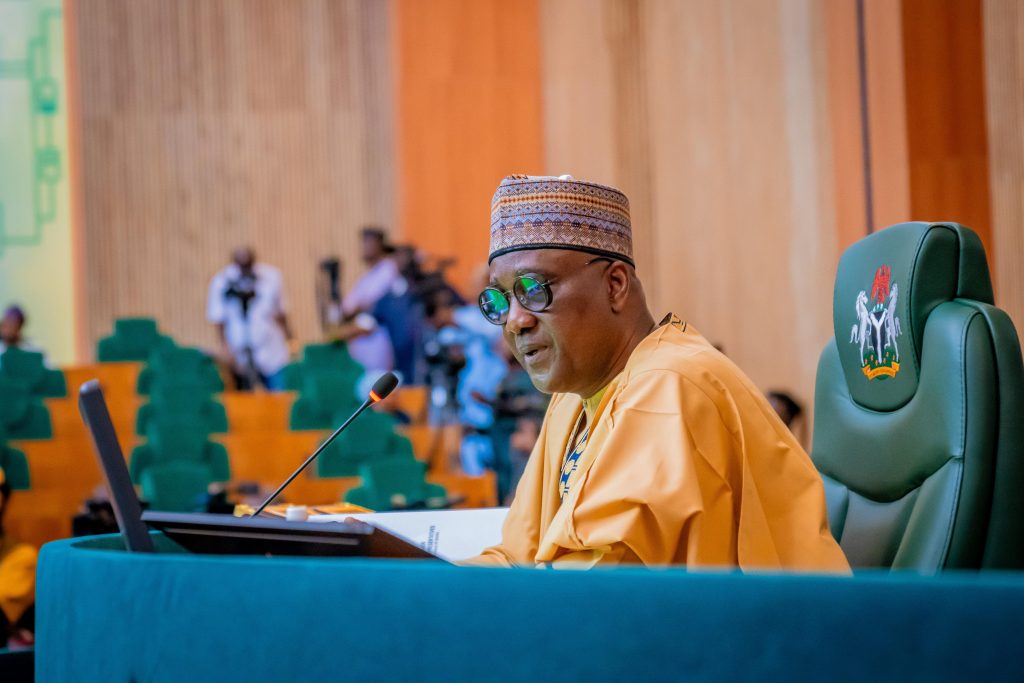
Speaker Abbas made the appeal while declaring open NASS Open Week 2026 and the presentation of the Third-Year Scorecard/performance review of the House in the chambers on Tuesday.

The three-day ceremony packed with a series of activities and events is themed, ‘Three Years of the 10th Assembly: Advancing Transparency, Incision, and Reform.’

The President of the Senate, Distinguished Senator Godswill Akpabio, GCON, declared the Open Week open.

Speaker Abbas said, “My appeal to the citizen who observes us today is therefore a simple one: draw closer. Acquaint yourself with the true workings of your parliament. Read a bill before you pass judgment upon it. Submit your memoranda when we call for them. We take your submissions seriously and consider your input in amending laws. It is for this reason that our young people will gather this week to confront the scourge of disinformation and to lay claim to their voice ahead of 2027.

“A democracy is made strong not by those who applaud it from a distance, but by those who step forward and take part. Open Week is the hand this House extends. I ask you to take it.”

The Speaker noted that the House welcomes constructive criticism, which he said is critical to good law-making. He, however, urged citizens to study bills and other legislation before criticising them.

He said, “You have just been presented with the full scorecard. Permit me to draw out a few figures, for figures do not flatter. The citizens of this nation submitted 2,747 bills to this House. Of these, we passed 363, and 72 have already received presidential assent and become law.

“These are not lines upon a page; they are measurable and lasting change. These figures represent the highest for any Assembly since 1999.”

He added, “One of those laws now offers our young people interest-free student loans, so that no Nigerian student is turned away from a lecture hall for want of means. Another has reformed how the nation raises and shares its revenue. Others have created commissions to carry development into every region of the Federation.

“The landmark statutes are only part of our work: more than 800 citizens have petitioned this House, and we have already brought hundreds of those matters to resolution. That, in my estimation, is this House at its most faithful.

“Where we have served the nation well, the scorecard records it. Where we have fallen short, it records that also.”

The Speaker, however, urged lawmakers to lift their gaze beyond the records, towards the purpose that animates them. “The ultimate aim of this House was never to pass the greatest number of laws. It was to help build a Nigeria in which a child in the remotest village may expect the same protection of the law, the same access to learning, and the same measure of dignity as a child born to privilege in our cities,” he noted.

Speaker Abbas added that “every reform we have supported, every budget we have refined, and every oversight duty we have discharged is a single brick laid toward that one enduring edifice.”

While noting that “we have not yet arrived,” Speaker Abbas said the lawmakers “stand closer than we did three years ago.” He stated, “The foundation is deeper, and the will of this House is firmer. In the final reckoning, the difficult choices of these years are bending, steadily and surely, toward the good of the Nigerian people. That is the conviction that keeps us at our posts and the promise this Parliament renews before you this day.”

Speaker Abbas recalled that at the inauguration of the House in 2023, the parliament asked to be “measured against our own promises, and we meant it.”

While noting that the Open Week is “designed not as a lecture but as a national conversation,” the Speaker said a place has been reserved for the citizens at every table.

Speaker Abbas also recalled how President Bola Ahmed Tinubu, GCFR, asked Nigerians to “accept a difficult but necessary course of reforms.” He added that the administration’s reforms “were not modest adjustments; they reached into the very foundations of our economy, into how it is financed, how our currency is valued, and how our common revenue is shared and invested in our people.”

The Speaker stressed that reforms of such magnitude demand much of a nation, and still more of the institutions charged with carrying them.

“This is where the record of these three years becomes a record of partnership. Every policy of the Executive still had to become law, to pass through appropriation, and to withstand legislative scrutiny. That is the indispensable work this House has performed.

“We laid the legal foundation for the tax reforms that will render our revenue fairer for generations to come. We enacted budgets directing resources toward infrastructure, toward power, and toward the human capital upon which all else depends.

“We gave statutory force to the reform of student financing. The President furnished the vision; the National Assembly furnished the laws that render the vision enforceable. That is the true measure of legislative support, and it is worth far more than applause.”

Speaking on the kidnap of pupils, students, and teachers by terrorists in Oyo State and their eventual rescue by security forces, Speaker Abbas stated that “nothing tests a government, or a parliament, so severely as the safety of the citizen.”

While declaring that “our security forces are gaining ground,” the Speaker stated that the government “will not rest until every Nigerian is safe.” He said, “Consider one event from only days ago that shows the courage of men and women who refuse to tire, retreat, or accept defeat.”

While saying that the nation owes security officers who died on the rescue mission “a debt that words can never fully discharge,” the Speaker stated that rescue was not the “product of chance,” but the “fruit of every appropriation this House has fought to place in the hands of those who protect our children.”

He added, “Yet the deeper lesson of Oyo is that a nation of this magnitude cannot be policed in perpetuity from a single command in Abuja. On this question, this House has already acted. In the course of the constitutional reform ably led by our Deputy Speaker, this House passed a State Police Bill and placed the matter squarely before the nation. Tomorrow’s roundtable carries that work forward, in the open and before you.

“I am, indeed, able to share a development that speaks to the seriousness with which this administration regards the safety of Nigerians. His Excellency the President has now transmitted to the National Assembly an Executive version of the State Police Bill, one that is more robust and more comprehensive than the version this House earlier passed.”

Speaker Abbas described the police bill as “the product of a dedicated committee” inaugurated by President Tinubu and chaired by former Speaker of the House/Chief of Staff to the President, Rt. Hon. Femi Gbajabiamila.

He said, “I commend both the President for the diligence and the personal commitment he has brought to this cause. Mr. President, this is leadership of the first order, and the nation is grateful for it. The House will therefore recall the version it earlier passed, and accord the Executive Bill the expedited consideration that a matter of this urgency deserves.”

The Speaker acknowledged the technical partnerships and cooperation from the National Assembly Library Trust Fund (NALTF); Policy and Legal Advocacy Centre (PLAC); Foreign, Commonwealth and Development Office (FCDO); the European Union (EU); YIAGA Africa, International IDEA, Nigerian Economic Summit Group (NESG); and the Friedrich Ebert Stiftung. “Your confidence in this institution is a trust we do not hold lightly,” he said.

Speaker Abbas also paid tribute to the Senate under the “wise and steady” leadership of the President of the Senate, Senator Godswill Akpabio, GCON, saying, “The Red Chamber has proved a true partner in every national task we have undertaken.”

The opening ceremony of the 2026 National Assembly Open Week was attended
by dignitaries including the Chief of Staff to the President and former Speaker, Rt. Hon. Femi Gbajabiamila, CFR; Minister of Health, Prof. Mohammed Ali Pate; Deputy Governor of Rivers State, Mrs. Ngozi Nma Odu; former speakers, Aminu Bello Masari, Patricia Etteh, and Yakubu Dogara; former deputy speakers, Bayero Nafada, Emeka Ihedioha, and Babangida Nguroje; Emir of Zazzau, His Royal Highness, Amb. Ahmad Nuhu Bamalli.

Others were the British High Commissioner to Nigeria, Richard Montgomery; the European Union Ambassador to Nigeria and ECOWAS, Amb. Gautier Mignot; the Executive Secretary of the National Assembly Library Trust Fund, Hon. Henry Nwawuba; Executive Director of PLAC, Mr. Clement Nwankwo; representatives of development partners such as the International IDEA, Yiaga Africa, FCDO, Friedrich Ebert Stiftung, and the Nigerian Economic Summit Group, among many others.

Read More

That is the number of bills the citizens of this Republic brought before this House in three legislative years. It is the highest such volume recorded since the return of democratic rule in 1999. Behind each of those bills stands a Nigerian who believed that the law could better their condition. This morning, I wish to account for how this House has honoured that trust.

KEYNOTE ADDRESS AT THE OPENING CEREMONY OF THE 2026 NASS OPEN WEEK AND THE UNVEILING OF THE THIRD-YEAR LEGISLATIVE SCORECARD DELIVERED BY RT. HON. ABBAS TAJUDEEN, PhD, GCON, SPEAKER OF THE HOUSE OF REPRESENTATIVES

NATIONAL ASSEMBLY COMPLEX, ABUJA, JULY 14, 2026

[Protocols]

Permit me to begin with a single figure: two thousand, seven hundred and forty-seven.

That is the number of bills the citizens of this Republic brought before this House in three legislative years. It is the highest such volume recorded since the return of democratic rule in 1999. Behind each of those bills stands a Nigerian who believed that the law could better their condition. This morning, I wish to account for how this House has honoured that trust.

It is my honour to welcome you to the 2026 Open Week of the National Assembly, and to the unveiling of the Third-Year Scorecard of the 10th House of Representatives. Our theme declares our purpose plainly: the advancement of transparency, inclusion, and reform.

I address three constituencies at once. To my colleagues, the Honourable Members, whose devotion has sustained this institution through many demanding sessions, I offer my gratitude. To our distinguished guests, our revered traditional rulers, our development partners, the diplomatic corps, civil society, the press, and the young citizens present, your attendance honours this House. And to the millions of Nigerians who follow these proceedings from their homes, markets, and places of work, this address is directed, above all, to you. This House belongs to you before it belongs to any of us.

Let me be plain about why we gather. Open Week was conceived not as an exercise in self-congratulation, but as an act of accountability. Openness is not a courtesy this House extends at its pleasure; it is an obligation it owes to those it serves. In opening these doors, we affirm one enduring principle: that the making of your laws is your concern, and that you are entitled to observe it, to interrogate it, and to help shape it. No other arm of government submits itself to public examination in this manner, and we do so not with reluctance, but with conviction.

Before I speak of our record, candour obliges me to acknowledge a plain truth: we did not begin from nothing.

Governance is a continuum, a relay in which no single runner completes the course alone. This House was not born in 2023. Its story begins in 1960, and it has since passed through many able and dedicated hands. Today, therefore, I honour all who have presided over this Chamber before us, from the earliest Speakers of our Republic to those of recent memory. I acknowledge the former presiding officers present with us, among them Rt. Hon. Patricia Etteh, who made history as the first woman to lead this House, and I pay tribute to Rt. Hon. Femi Gbajabiamila, who now serves as Chief of Staff to the President. Much of what we celebrate this week grew from seeds that they sowed. Today, we are honoured to carry that work forward with pride.

You have just been presented with the full Scorecard. Permit me to draw out a few figures, for figures do not flatter.

The citizens of this nation submitted two thousand, seven hundred and forty-seven bills to this House. Of these, we passed three hundred and sixty-three, and seventy-two have already received presidential assent and become law. These are not lines upon a page; they are measurable and lasting change. These figures represent the highest for any Assembly since 1999.

One of those laws now offers our young people interest-free student loans, so that no Nigerian student is turned away from a lecture hall for want of means. Another has reformed how the nation raises and shares its revenue. Others have created commissions to carry development into every region of the Federation. The landmark statutes are only part of our work: more than 800 citizens have petitioned this House, and we have already brought hundreds of those matters to resolution. That, in my estimation, is this House at its most faithful.

Where we have served the nation well, the Scorecard records it. Where we have fallen short, it records that also. At our inauguration in 2023, we asked to be measured against our own promises, and we meant it.

This week is designed not as a lecture but as a national conversation, and at every table, a place has been reserved for you, the citizens. Later today, we will hold our first session with civil society to examine how faithfully we have carried out our oversight function. Tomorrow morning, we convene what may prove to be the most consequential security dialogue this Parliament has hosted on the question of State Policing. Tomorrow afternoon, we will consider how to bring more women and more people with disabilities into our public life. On the final day, we sit with the private sector and the business community to discuss the laws that create employment and attract investment, and we hand the floor to our young people to confront the corrosion of truth in an age of easy falsehood. Permit me a word on the matters that touch our citizens most directly.

President Bola Ahmed Tinubu, GCFR, asked this nation to accept a difficult but necessary course of reforms. His reforms were not just modest adjustments. They reached into the very foundations of our economy, into how it is financed, how our currency is valued, and how our common revenue is shared and invested in our people. Reforms of such magnitude demand much of a nation, and still more of the institutions charged with carrying them.

This is where the record of these three years becomes a record of partnership. Every policy of the Executive still had to become law, to pass through appropriation, and to withstand legislative scrutiny. That is the indispensable work this House has performed. We laid the legal foundation for the tax reforms that will render our revenue fairer for generations to come. We enacted budgets directing resources toward infrastructure, toward power, and toward the human capital upon which all else depends. We gave statutory force to the reform of student financing. The President furnished the vision; the National Assembly furnished the laws that render the vision enforceable. That is the true measure of legislative support, and it is worth far more than applause.

Nothing tests a government, or a parliament, so severely as the safety of the citizen. Let me speak plainly: our security forces are gaining ground, and we will not rest until every Nigerian is safe. Consider one event from only days ago that shows the courage of men and women who refuse to tire, retreat, or accept defeat.

In Oyo State, forty-four of our citizens, schoolchildren and their teachers, were seized from their classrooms and taken into the forests. For weeks, the nation held its breath. Then, through a joint operation of our armed forces, our police, our intelligence services, our civil defence corps, and the local hunters and vigilantes who know that terrain, all forty-four were restored to freedom. Some of the gallant officers who entered the forest to secure their release did not return, and to them this nation owes a debt that words can never fully discharge. That rescue was not the product of chance. It was the fruit of every appropriation this House has fought to place in the hands of those who protect our children.

Yet the deeper lesson of Oyo is that a nation of this magnitude cannot be policed in perpetuity from a single command in Abuja. On this question, this House has already acted. In the course of the constitutional reform ably led by our Deputy Speaker, this House passed a State Police Bill and placed the matter squarely before the nation. Tomorrow’s roundtable carries that work forward, in the open and before you.

I am, indeed, able to share a development that speaks to the seriousness with which this administration regards the safety of Nigerians. His Excellency the President has now transmitted to the National Assembly an Executive version of the State Police Bill, one that is more robust and more comprehensive than the version this House earlier passed. That Bill is the product of a dedicated committee inaugurated by the President and chaired by a distinguished former Speaker of this House, Rt. Hon. Femi Gbajabiamila. I commend both the President for the diligence and the personal commitment he has brought to this cause. Mr. President, this is leadership of the first order, and the nation is grateful for it. The House will therefore recall the version it earlier passed, and accord the Executive Bill the expedited consideration that a matter of this urgency deserves.

To the thoughtful citizens and to the Members who have observed that they are yet to see the draft Bills and who fear that this matter is being settled beyond public view, I offer this reassurance: nothing here is concealed. The Bill will pass through Public Hearing and open scrutiny. And I give this assurance to every Nigerian: the framework will carry robust safeguards. A state must satisfy clear and demanding standards and safeguards before it may be entrusted with a police service. There will be accountability, the protection of fundamental human rights, and firm boundaries between federal and state authority, so that no state police force may ever be reduced to the private instrument of a governor. We have seen how power conducts itself in the absence of restraint, and we have no intention of repeating that error. This roundtable is our invitation to examine the draft and to submit your memoranda before it becomes law. Your security is far too grave a matter to be designed behind closed doors.

Tomorrow afternoon, we turn to a different order of security, the security of belonging. It is an uncomfortable truth that women occupy fewer than one in twenty seats in this National Assembly, and that some of our State Houses of Assembly do not have a single woman among them. No nation ascends by consigning half of its talent to the margins. The Special Seats Bill is our considered answer, and it carries both the personal conviction of President Tinubu and the tireless advocacy of our First Lady, Her Excellency Senator Oluremi Tinubu, who honours us as National Champion for this cause.

A reasonable question has been raised: whether reserved seats would simply confer position upon a favoured few, without the discipline of an election. The answer we bring to this dialogue is the Electoral College model. The women who occupy these seats will be appointed by no one. They will be elected, by secret ballot conducted by the Independent National Electoral Commission, through a college of representatives whom the people themselves have already elected, from our councillors to our state legislators to the Members of this House and of the Senate. It is a genuine mandate, earned rather than granted, and it diminishes no existing seat. The measure is, by deliberate design, temporary, a bridge to be crossed and thereafter reviewed. I invite every Nigerian to test the proposition with us tomorrow and make their contributions.

Let me be candid and account for more than our successes. Many of the Bills introduced in the House do not advance more swiftly through their readings. Too often, the first legislative instinct is to establish yet another agency by statute, when sound lawmaking demands that we strengthen the mandate of the institutions we already have and reduce the cost of governance. We have noted this and are correcting it. Constructive criticism is critical to good lawmaking, and this House is open to input from the public.

Let me also correct one belief that harms our democracy. Some assume, in good faith, that when a President signs a Bill quickly, then the legislature is a rubber-stamp. That is not how the work is done. Swift assent is usually the reward of months of committee work, completed long before the cameras arrive. Even the Congress of the United States has, in urgent moments, passed sweeping legislation in a single day, and no serious observer called it surrender. Speed built on hard preparation is the mark of a Parliament that is working, not one that has stopped thinking.

My appeal to the citizen who observes us today is therefore a simple one: draw closer. Acquaint yourself with the true workings of your Parliament. Read a Bill before you pass judgement upon it. Submit your memoranda when we call for them. We take your submissions seriously and consider your input in amending laws. It is for this reason that our young people will gather this week to confront the scourge of disinformation and to lay claim to their voice ahead of 2027. A democracy is made strong not by those who applaud it from a distance, but by those who step forward and take part. Open Week is the hand this House extends. I ask you to take it.

An undertaking of this scale is never the achievement of one House alone. I record the gratitude of this House to our partners, from the National Assembly Library Trust Fund and the Policy and Legal Advocacy Centre to the Foreign, Commonwealth and Development Office, the European Union, YIAGA Africa, International IDEA, the Nigerian Economic Summit Group, and the Friedrich Ebert Stiftung. Your confidence in this institution is a trust we do not hold lightly.

I must also pay tribute to the Senate. Under the wise and steady leadership of the President of the Senate, His Excellency Distinguished Senator Godswill Akpabio, GCON, the Red Chamber has proved a true partner in every national task we have undertaken. His statesmanship, his warmth, and his instinct for consensus have rendered the labour of a bicameral legislature not merely possible, but genuinely fruitful. On behalf of this House, I salute him and every distinguished Senator, and I thank him for graciously consenting to declare this Open Week open.

I thank you for your kind attention. I welcome you, once more, to your National Assembly. And may God continue to keep and to bless the Federal Republic of Nigeria.

Read More

Represented by the Speaker of the House of Representatives Rt. Hon. Abbas Tajudeen, Ph.D., GCON, President Tinubu explained that the project is a direct continuation of the road from the Bill Clinton Drive to Tungan Madaki community road, which was commissioned a few weeks ago as part of the activities marking the third anniversary of the Renewed Hope administration.

Infrastructure at the core of our Renewed Hope Agenda — President Tinubu

President Bola Ahmed Tinubu, GCFR, has stated that infrastructural development is at the core of the Renewed Hope Agenda of his administration.

President Tinubu noted that “infrastructure is not just concrete and asphalt; it is the bridge between potential and prosperity, and that is the core of the Renewed Hope Agenda.”

The President stated this in Abuja on Monday at the official flag-off of the access road from Tungan Madaki to Abuja-Kaduna Road, by Zuba, in the Federal Capital Territory.

Represented by the Speaker of the House of Representatives Rt. Hon. Abbas Tajudeen, Ph.D., GCON, President Tinubu explained that the project is a direct continuation of the road from the Bill Clinton Drive to Tungan Madaki community road, which was commissioned a few weeks ago as part of the activities marking the third anniversary of the Renewed Hope administration.

“What began as one road is now growing into a network, and that is how real development takes root,” he said, adding that Tungan Madaki, Zuba, and the communities along the corridor are home to “some of the hardest working Nigerians.”

He said, “They are farmers who feed our city, traders who move goods daily, students who commute for education, and families who deserve the same dignity of access as those in the city center.”

The President recalled that for many years, poor road access made life difficult in the area, while during the rains, movement was cut off. He added that during harvest, produce was lost before it reached the markets, while hours were wasted in transit and the cost of doing business remained high. “That changes today,” he stated.

While explaining that the new road will link Tungan Madaki directly to the Abuja-Kaduna road, cutting travel time, reducing vehicle maintenance costs, and opening a faster route for people and goods, President Tinubu noted that it will “connect rural productivity to urban opportunity.”

He said, “When farmlands are opened, food becomes cheaper in our markets. When communities are connected, young people have more reason to build enterprises at home. When response time for security agencies improves, our people are safer. Infrastructure is not just concrete and asphalt. It is the bridge between potential and prosperity, and that is the core of the Renewed Hope Agenda.”

The President stressed that the FCT was conceived to serve the entire nation, and that vision can only be achieved when the satellite towns and gateway communities are properly integrated. He noted that the road is strategic in that regard, as it eases pressure on the city center, creates alternatives for commuters, and strengthens the economic corridor between Abuja, Kaduna and the North-West as a whole.

“It also sends a clear signal to investors that this axis is open for housing, schools, health facilities, and industries,” he added.

President Tinubu commended Minister of the FCT, Barrister Nyesom Wike, CON, and the entire FCT Administration for the discipline and speed with which projects are being delivered. He said from major highways to community access roads like this one, “We are seeing a return to planning, a rejection of abandoned projects, and a focus on results that citizens can feel.”

The President stated, “When I gave the charge to transform the FCT, the instruction was simple: deliver tangible outcomes that improve daily life. The work speaks for itself.

“This project will also create jobs for our teeming youths during construction and will support livelihoods in transport, supply, and services after completion.”

Read More