Plan by the Federal Government to amend the N10.59 trillion 2020 budget passed by the National Assembly
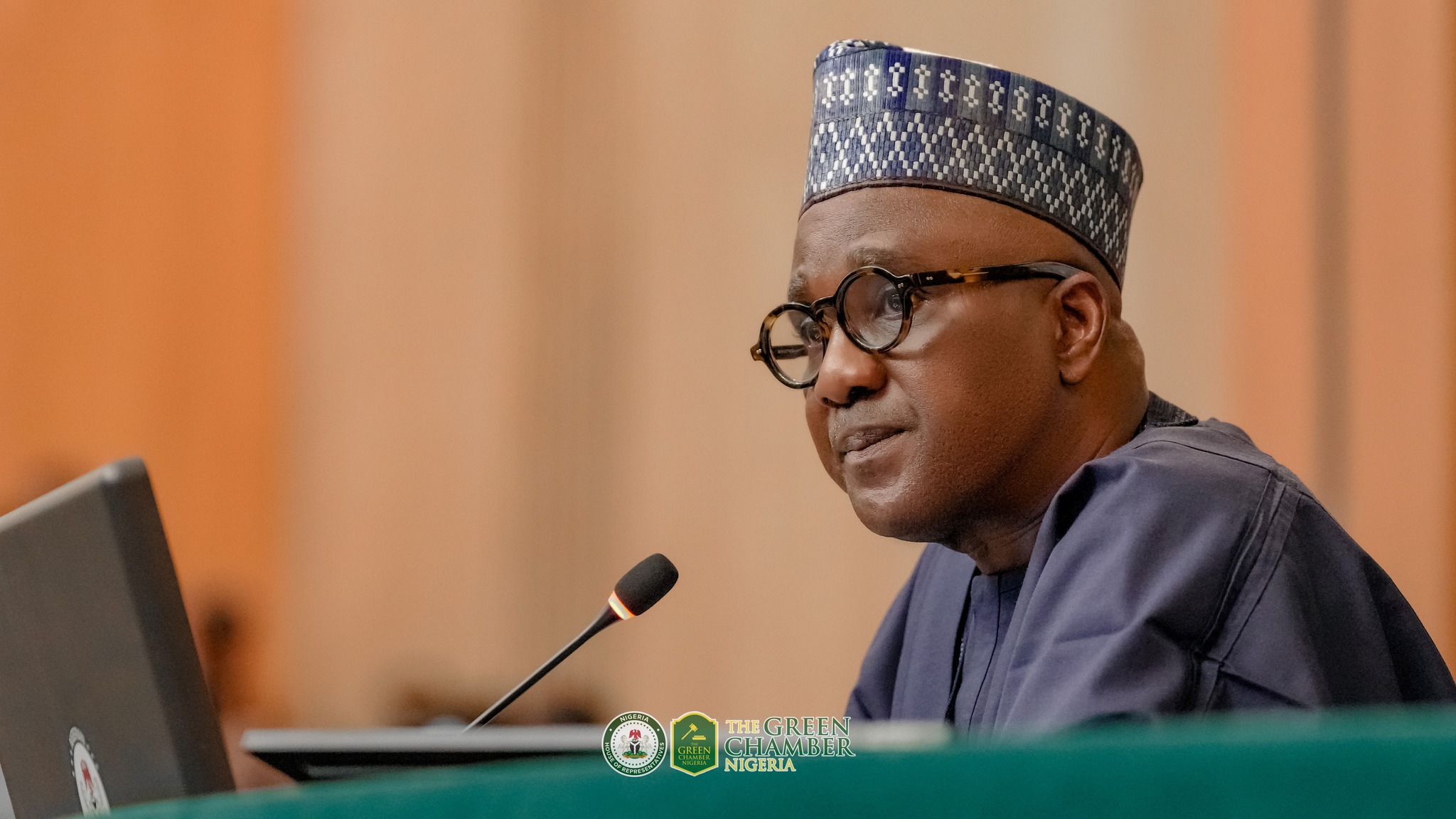
Today, the Speaker of the House of Representatives, Rep. Femi Gbajabiamila, the Senate President Dr. Ahmad Lawan and the Leadership of the National Assembly met with the Minister of Finance, Budget and National Planning to be briefed on the plan by the Federal Government to amend the N10.59 trillion 2020 budget passed by the National Assembly in December last year.
In his remarks, the Speaker called on the Federal Government to adopt a feasible benchmark in the proposed amendment to the 2020 budget.
“The benchmark is so critical and so important, because once you passed the law, it becomes difficult to adjust that benchmark, and then what happens to the excess?
“We’ve always had problems with the Excess Crude Account, potentially an account which has no backing of the law. So, let’s even assume that the price remains static at $35, that means we have $10 going to the Excess Crude Account which we have no control over in terms of spending, that is why we guard that benchmark price very jealously.
Speaking on Nigeria’s debt profile, the Speaker said, “I would also want to address the issue of our deficit and tie it with the issue of debt relief. I’m not sure I heard any presentation on how much we owe and how much we are paying back in this budget.
Earlier, the Minister of Finance, Zainab Ahmed, while briefing the leadership of the National Assembly said, “the US$57 crude oil price benchmark approved in the 2020 budget is no longer sustainable.”
She said that: "it is necessary to reallocate resources in the 2020 budget, to ensure the effective implementation of required emergency measures, and mitigate the negative socioeconomic effects of the COVID-19 pandemic.”
She added that in line with the global economic outlook and relevant domestic considerations, the assumptions underpinning the 2020-2022 Medium Term Expenditure Framework (MTEF) and the 2020 Budget was revised to slash crude oil benchmark price from US$57 per barrel to US$25 per barrel; reduce crude oil production benchmark from 2.18 million barrels per day to 1.9 mbpd.
The Minister also said that the federal government have adjusted the budget exchange rate to N360/US$1; and reduced the upfront fiscal deductions by the Nigerian National Petroleum Corporation (NNPC) for mandated Oil and Gas sector expenditures by 65 percent from N1.223 trillion to N424 billion.
She disclosed that the amount available for funding the 2020 Budget is now estimated at N5.548 trillion, down from N8.419 trillion, a revised revenue estimate which is 34 percent (N2.87 trillion) lower than what was initially approved.
On Provision of N500 billion for COVID-19 Intervention Fund, the Finance Minister in her presentation explained that N263.63 billion will be sourced from Federal Government Special Accounts, N186.37 billion from Federation Special Accounts and the balance of N50 billion expected as grants and donations.
According to her, “the sum of N186.37 billion will be applied toward COVID-19 interventions across the federation, while an additional N213.60 billion was provided in the Service Wide Votes for COVID-19 Crisis Intervention recurrent expenditures.”
Related Post